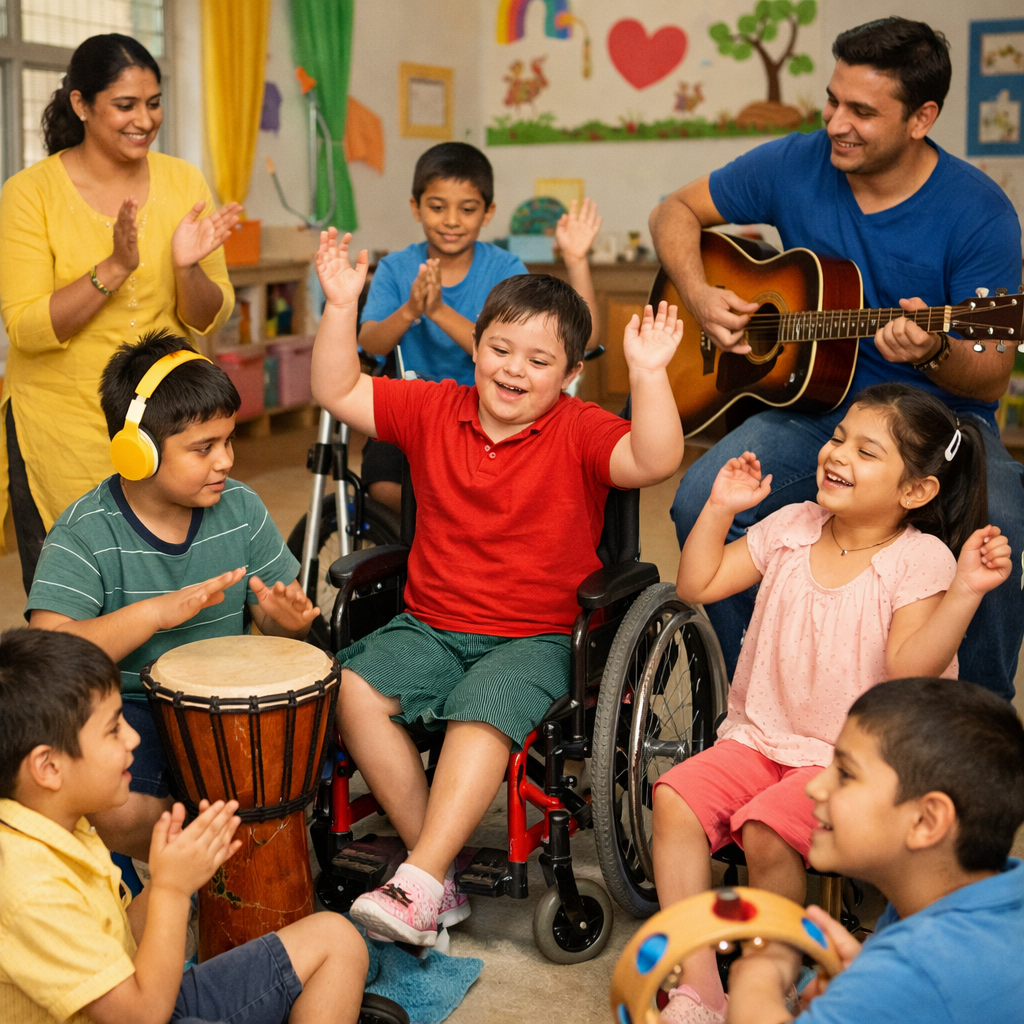
Specially abled children living in child care institutions often enter care due to abandonment, poverty, disability-related stigma, or the inability of families to provide sustained support. While these children are entitled to comprehensive care, protection, and inclusion, institutional environments frequently face constraints such as limited specialised training among caregivers, frequent staff changes, structured routines, and minimal opportunities for individualised engagement. These challenges can significantly affect children with intellectual, sensory, communication, or multiple disabilities—many of whom remain withdrawn or unable to express their needs through conventional verbal or behavioural means.
Experiential observations from children’s homes indicate that music and dance can serve as powerful, non-verbal mediums of engagement for specially abled children. Simple rhythms, repetitive movements, familiar sounds, and syllabic patterns enable participation regardless of speech, cognitive level, or motor limitations. Children with speech and language delays, autism spectrum conditions, hearing impairments, or motor difficulties often show improved attention, emotional expression, and social interaction during music and movement activities.
Music and dance provide safe, predictable, and emotionally regulating experiences that help build trust and reduce anxiety. Their intrinsically motivating nature encourages participation without coercion, acting as natural reinforcers for positive responses. Therapeutically, these activities support sensory integration, motor coordination, emotional regulation, and self-esteem, making them essential components of inclusive care, rehabilitation, and holistic development for specially abled children in institutional settings.
Message
In India, most childcare institutions accommodate at least a few children with special needs. Given the limited number of specialised facilities, it is important for every CCI to incorporate inclusive, low-cost interventions, such as music and movement activities, to support the developmental and emotional needs of these children.


 Safe Childhood India
Leave a comment