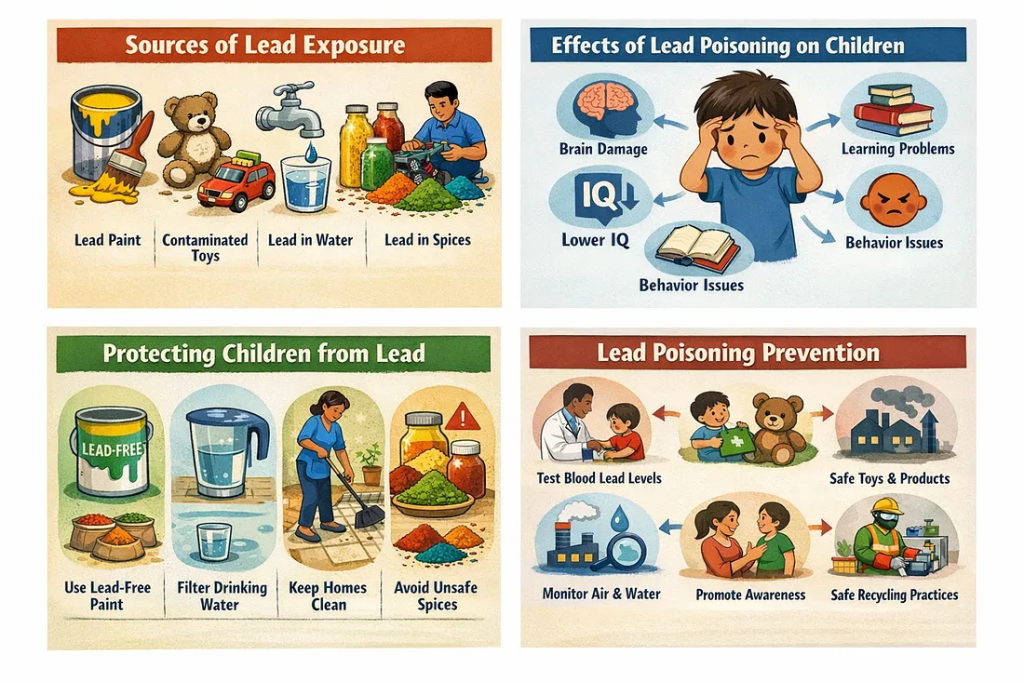
Lead enters children’s bodies through multiple pathways, including lead-containing paints, unsafe toys, adulterated spices and cosmetics, industrial pollution, informal recycling of batteries, and contaminated soil and drinking water. These sources are often interconnected with weak regulation and limited oversight. Effective risk reduction therefore depends on robust legal frameworks, strict enforcement of product safety standards, and sustained coordination among health, environment, industry, urban development, and child protection authorities.
A strong public health surveillance system is central to safeguarding efforts. Targeted blood lead level screening in high-risk communities enables early detection, timely intervention, and evidence-based policy responses. Surveillance data also help find places where people are most likely to be exposed and set regulatory priorities. Community awareness is also very important. Parents, caregivers, teachers, and child care institutions must be equipped with practical knowledge to identify potential sources of lead and adopt safer practices in homes, schools, and neighbourhoods.
Embedding lead poisoning prevention among maternal, neonatal, and child health programs strengthens protection during the most vulnerable stages of development. The benefits of this kind of protection last a lifetime: it protects cognitive development, improves educational achievement, and lowers future health and social costs.
Message
Creating a lead-safe environment is therefore not only a public health responsibility but also a moral and developmental commitment to securing every child’s right to healthy growth, dignity, and well-being.


 Safe Childhood India
Leave a comment