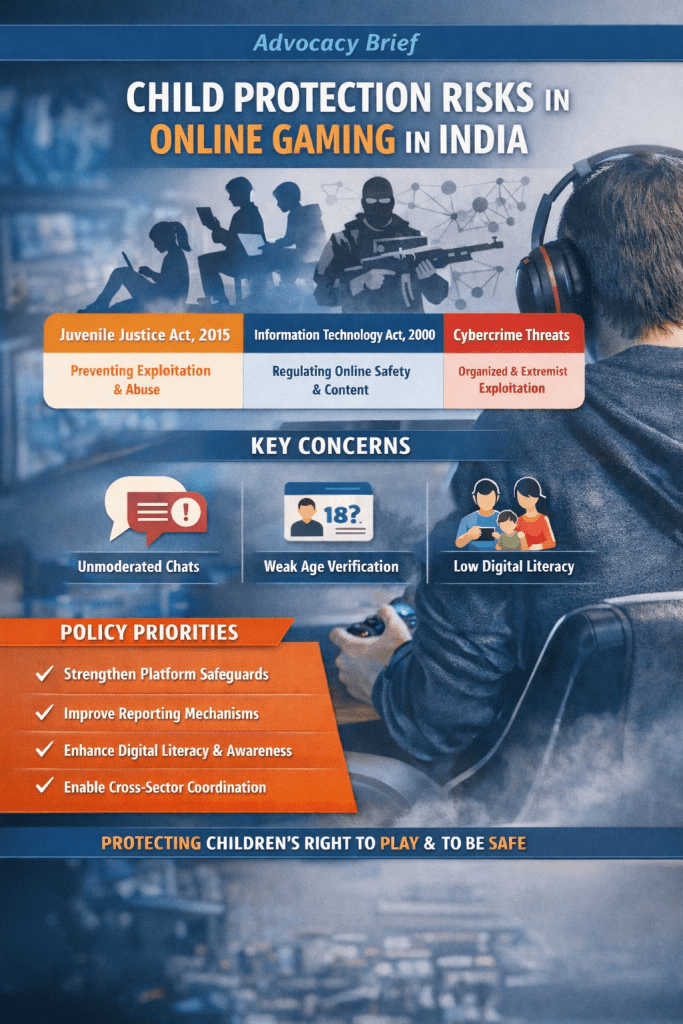
Online gaming has become an integral part of children’s digital lives in India, enabled by widespread smartphone access and affordable internet connectivity. Gaming platforms increasingly function as social spaces where children interact, collaborate, and form identities. While these environments offer developmental and social benefits, they are also being misused by organized criminal networks to groom, influence, and recruit children into unlawful and violent activities.
Such practices undermine the objectives of the Juvenile Justice (Care and Protection of Children) Act, 2015, which mandates protection of children from exploitation, abuse, and exposure to criminal behaviour. The Information Technology Act, 2000, along with India’s cybercrime prevention frameworks, establishes regulatory responsibility for addressing online harms, intermediary accountability, and unlawful digital content. However, the scale, anonymity, and immersive nature of gaming platforms present enforcement and detection challenges.
Key vulnerabilities include unmoderated communication features, weak age-verification systems, and limited awareness among children, parents, and frontline child protection actors. Addressing these risks requires coordinated action among regulators, gaming companies, law enforcement agencies, child protection institutions, and civil society.
Message
Policy responses should focus on strengthening platform safeguards, child-friendly reporting mechanisms, digital literacy, and integration of online exploitation indicators into existing child protection and cybercrime systems. Protecting children’s right to play must remain inseparable from safeguarding their right to safety, dignity, and freedom from violence.

 Safe Childhood India
Leave a comment