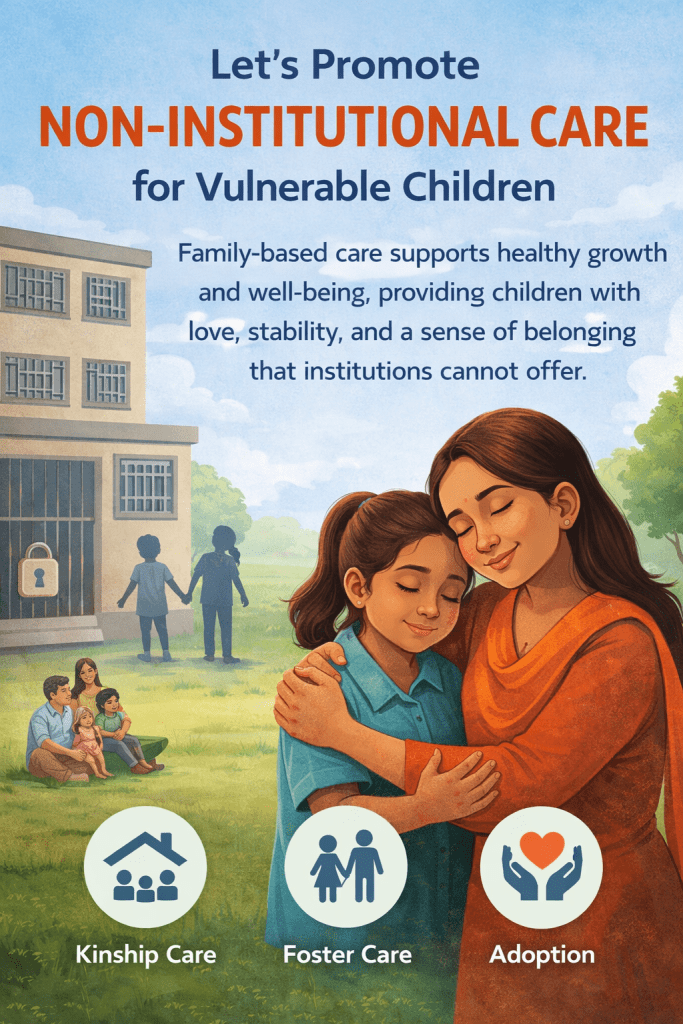
Long periods of institutional care can seriously harm children and affect their overall development
Institutions, even when well-managed, are unable to provide the consistent love, attention, and personal care that a family offers When children grow up in institutions for many years, they often miss these essential experiences.
Extended institutionalization can slow emotional and social development. Children may struggle to form attachments, manage emotions, or trust others. Many also face delays in learning, communication, and decision-making because care in institutions is usually shared among many children and does not respond fully to individual needs. Older children are especially vulnerable, as they may begin to see institutional life as permanent, which can reduce confidence, motivation, and hope for the future.
Long stays in institutions can also affect a child’s sense of identity and belonging. Without family connections, children may feel isolated from society and unprepared for independent adult life. For these reasons, child protection systems worldwide recognise that institutional care should be used only when absolutely necessary and for the shortest possible time.
Family-based alternatives such as kinship care, foster care, and adoption provide children with better opportunities for healthy growth, stability, and long-term well-being.
Let us promote non-institutional care as the preferred option for children who cannot remain with their biological families. Family-based care such as kinship care, foster care, and adoption, provides children with love, stability, and a sense of belonging that institutions cannot fully offer. Growing up in a family environment supports healthy emotional, social, and cognitive development and helps children build trust and confidence.


 Safe Childhood India
Leave a comment