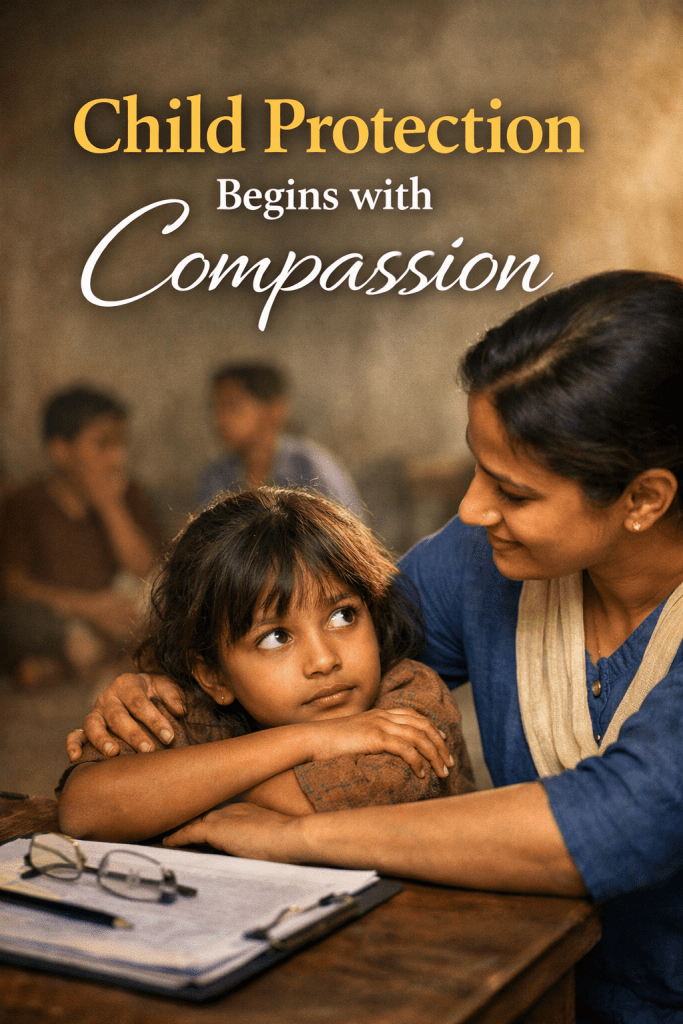
Compassion creates safety, dignity, and belonging. Compassion lies at the heart of effective child protection. It shapes how systems respond to children who have experienced abuse, neglect, abandonment, or loss, and determines whether those responses promote healing or deepen harm. Compassion does not dilute legal responsibility; instead, it strengthens it by ensuring that laws and procedures are applied with sensitivity, fairness, and respect for the child’s lived experience.
Children entering child protection systems often carry complex trauma. Their behaviour—withdrawal, anger, or resistance—may be a survival response to repeated betrayal or neglect. A compassionate approach recognises these signals not as defiance, but as communication. It prioritises emotional safety, builds trust gradually, and restores a child’s sense of control and dignity. Such care cannot be delivered through forms and timelines alone; it requires presence, patience, and understanding.
Child Care Institutions and adoption systems frequently become the first point of stability for children who have known instability all their lives. These children need more than shelter—they need reassurance, consistency, and belief in their worth. Across India, many children remain in institutional care while decisions are delayed or processes stagnate. Each delay has consequences, affecting a child’s emotional development and sense of belonging. Compassion ensures that systems remain responsive and that urgency is guided by the child’s best interests, not administrative convenience.
For social workers and child protection personnel, compassion supports ethical practice. It enables respectful engagement with birth families, restoration and family strengthening efforts, preparation, and balanced decision-making in complex cases. It also sustains professionals themselves, helping them navigate emotional strain and systemic limitations without losing their commitment to children.
Abused and neglected children need compassion most—adults who will listen, notice, and respond consistently. Child Welfare Committee members, childcare staff, field workers, counsellors, and policymakers each play a role in shaping a child’s experience of care.
Message
When compassion guides action, systems become humane, relationships become protective, and children are given the chance to heal, belong, and thrive. Child protection, at its core, is not only about compliance—it is about care.

 Safe Childhood India
Leave a comment