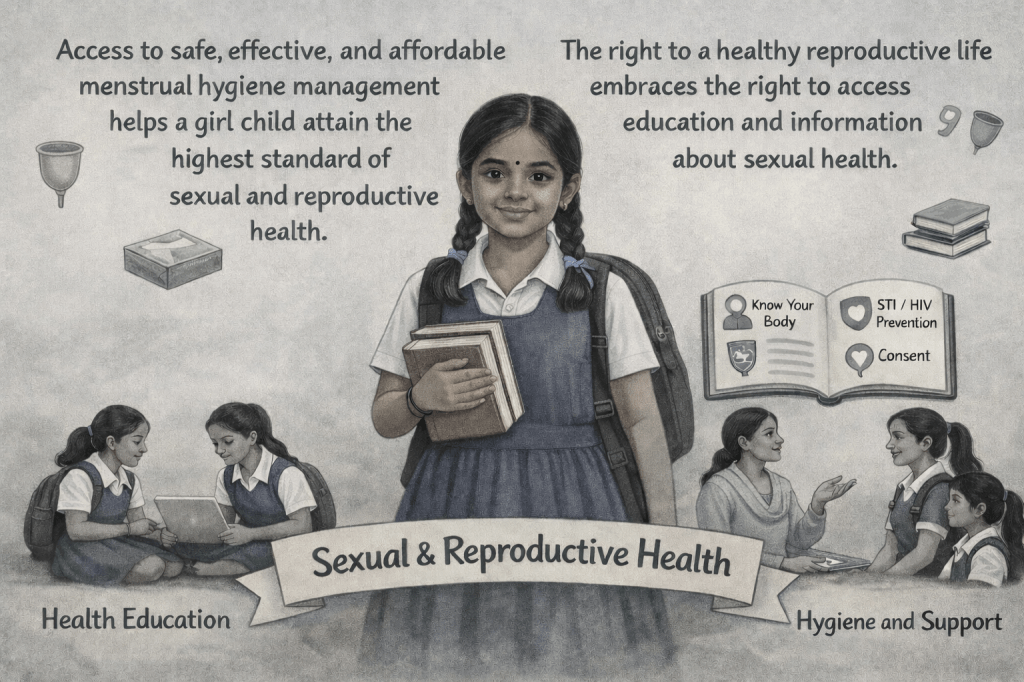
“Access to safe, effective, and affordable menstrual hygiene management measures helps a girl child attain the highest standard of sexual and reproductive health. The right to a healthy reproductive life embraces the right to access education and information about sexual health.”
The Supreme Court’s recognition of menstrual hygiene as a fundamental right under Article 21 seems clearly applicable to Child Care Institutions (CCIs) housing girl children, even though the case arose in the context of schools.
The Court held that access to menstrual hygiene products, safe sanitation facilities, privacy and disposal mechanisms is an essential component of the right to life, health, dignity, and equality. These constitutional guarantees are universal and apply to all girls, regardless of whether they reside in schools, hostels, CCIs, or other institutional settings. CCIs, in fact, assume a parental and custodial responsibility for children in their care and therefore bear a heightened duty to protect their physical and emotional well-being.
This obligation is further reinforced by the Juvenile Justice (Care and Protection of Children) Act, 2015, particularly the principles of the best interest of the child, dignity, non-discrimination, and gender-sensitive care under Section 3, as well as Section 39, relating to rehabilitation with due regard to age and gender. The JJ Model Rules and Mission Vatsalya guidelines also mandate adequate health, hygiene, and privacy standards for children residing in CCIs.
Accordingly, CCIs that house adolescent girls are legally required to ensure uninterrupted access to sanitary products, functional toilets with water and disposal facilities, privacy, counselling, and sensitization. Denial or inadequacy of menstrual hygiene facilities in CCIs would amount to a violation of both constitutional rights and statutory child protection norms.

 Safe Childhood India
Leave a comment