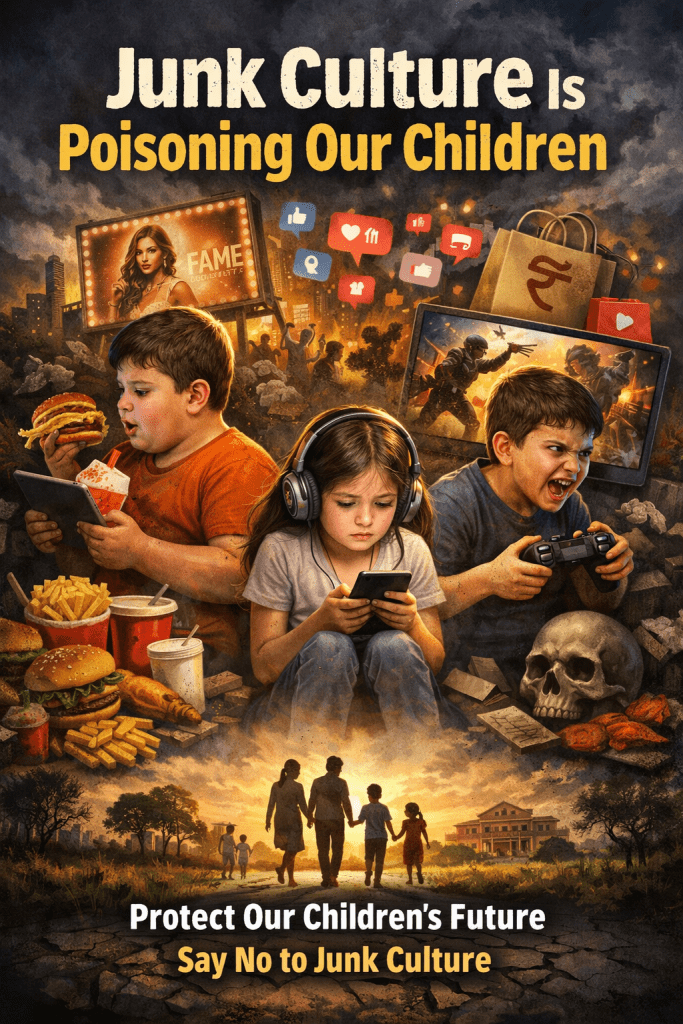
Junk culture goes far beyond fast food and unhealthy eating habits. It encompasses relentless screen exposure, addictive social media platforms, glorification of violence, instant fame, and the pressure to conform to unrealistic lifestyles. In India, and also in other parts of the globe, children are increasingly growing up in environments where their attention is monetised, emotions are subtly manipulated, and consumerism often replaces values such as empathy, patience, and responsibility. Childhood, which should nurture imagination and character, is being reshaped by algorithms and market forces.
The consequences are visible and deeply concerning. Many children today face declining physical health due to sedentary routines, along with rising levels of anxiety, low self-esteem, irritability, and social withdrawal. Excessive digital engagement weakens real-life relationships and reduces opportunities for meaningful interaction, compassion, and teamwork. Over time, this erodes social bonds and limits children’s ability to cope with challenges in a balanced manner.
Addressing this challenge requires deliberate and collective action. Parents must model balanced behaviour and mindful technology use. Schools should emphasise values, life skills, and emotional learning alongside academic success. Media and digital platforms must be held accountable for child-sensitive and age-appropriate content. Most importantly, society must reclaim childhood as a period of curiosity, creativity, play, and emotional security—not a marketplace for exploitation. Protecting childhood today is essential for nurturing a healthier and more humane future generation.
Message
If junk culture continues to define children’s experiences, we risk raising a generation disconnected from empathy, resilience, and social responsibility. Protecting children today is essential to securing a healthier, more humane future for India.

 Safe Childhood India
Leave a comment