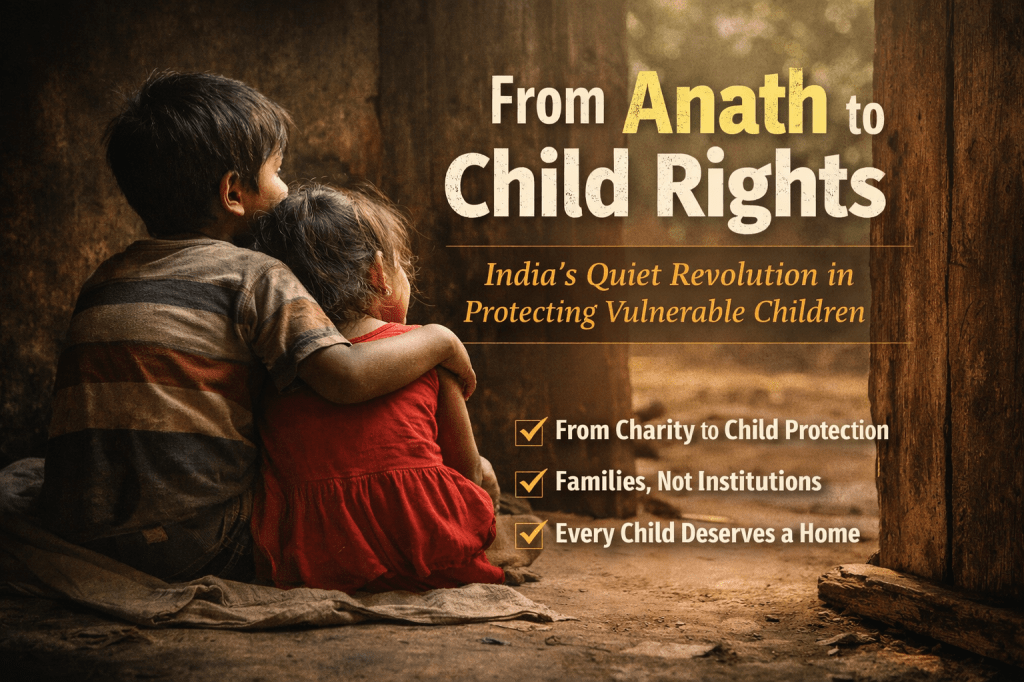
For centuries in India, a child without parents was simply called “Anath,”
The word carried both sorrow and compassion. It signified a child who had lost the protection of family and therefore deserved care from society. Communities, extended families, temples, and charitable institutions often stepped forward to help such children. Compassion, rather than law, was the primary safety net.
But over the last few decades, something remarkable has happened.
India has quietly transformed its approach to vulnerable children—from a system rooted in charity and sympathy to one grounded in rights, law, and accountability. Today, the language has changed. Instead of Anath, the law now speaks of a “child in need of care and protection.”
This shift in language reflects something deeper: a transformation in how the nation understands its responsibility toward children.

 Safe Childhood India
Leave a comment