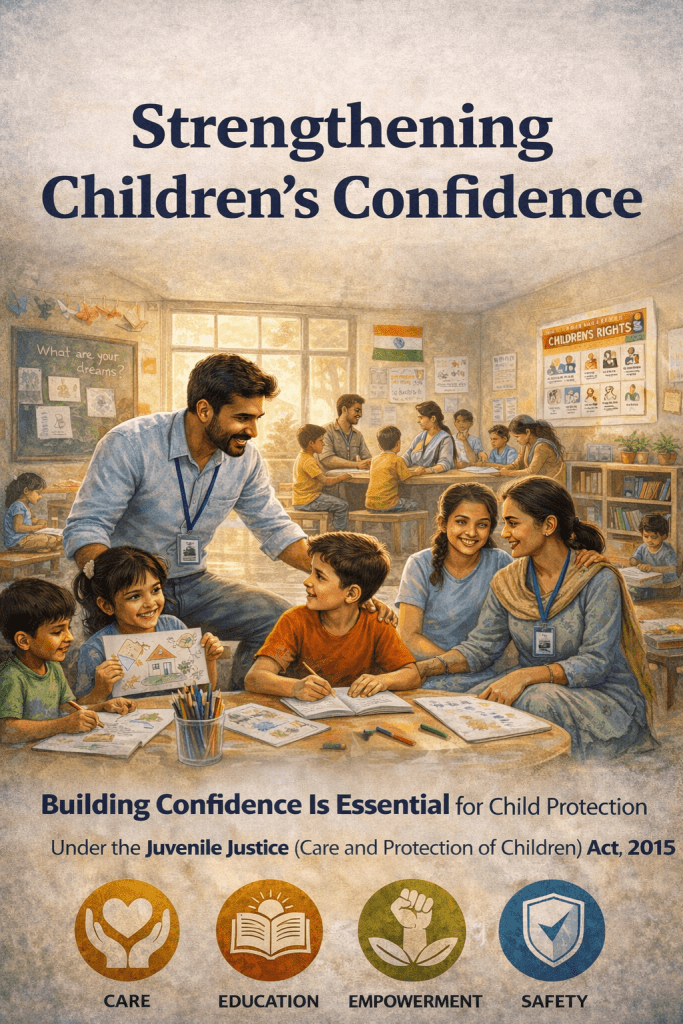
The development of self-confidence is a critical component of a child’s emotional, social, and psychological well-being. For children living within families, parents and caregivers play a primary role in fostering confidence through everyday interactions. However, for children residing in Child Care Institutions (CCIs), this responsibility rests largely with childcare staff and functionaries who operate within the child protection system. Under the Juvenile Justice (Care and Protection of Children) Act, 2015, CCIs are mandated not only to ensure physical safety but also to promote the holistic development and dignity of every child.
Confidence-building in institutional settings requires deliberate, consistent, and child-centred caregiving practices. Warmth, affection, and respectful communication help establish a sense of emotional security, particularly for children who have experienced neglect, abuse, or separation from family. Predictability in routines and consistency in adult responses foster trust and reduce anxiety, enabling children to develop a stable sense of self. Recognising effort and age-appropriate achievements reinforces self-worth and encourages positive behaviour.
Importantly, disciplinary practices within CCIs must be non-violent and educative, in line with the JJ Act and Model Rules. Children should be guided to understand the consequences of their actions while being reassured that their intrinsic value is not diminished by mistakes. Opportunities for participation in decision-making, expression of views, and problem-solving further strengthen autonomy and resilience, as envisaged under child-friendly care standards.
For adolescents in institutional care, respect for privacy, identity, and evolving capacities is essential. Staff must model respectful behaviour, acknowledge children’s perspectives, and create safe spaces for dialogue. Ultimately, confidence-building in CCIs is not an optional activity but a core child protection function.
Message
A nurturing institutional environment enables children to heal, develop self-belief, and transition successfully towards family-based care, social integration, and independent adulthood.

 Safe Childhood India
Leave a comment