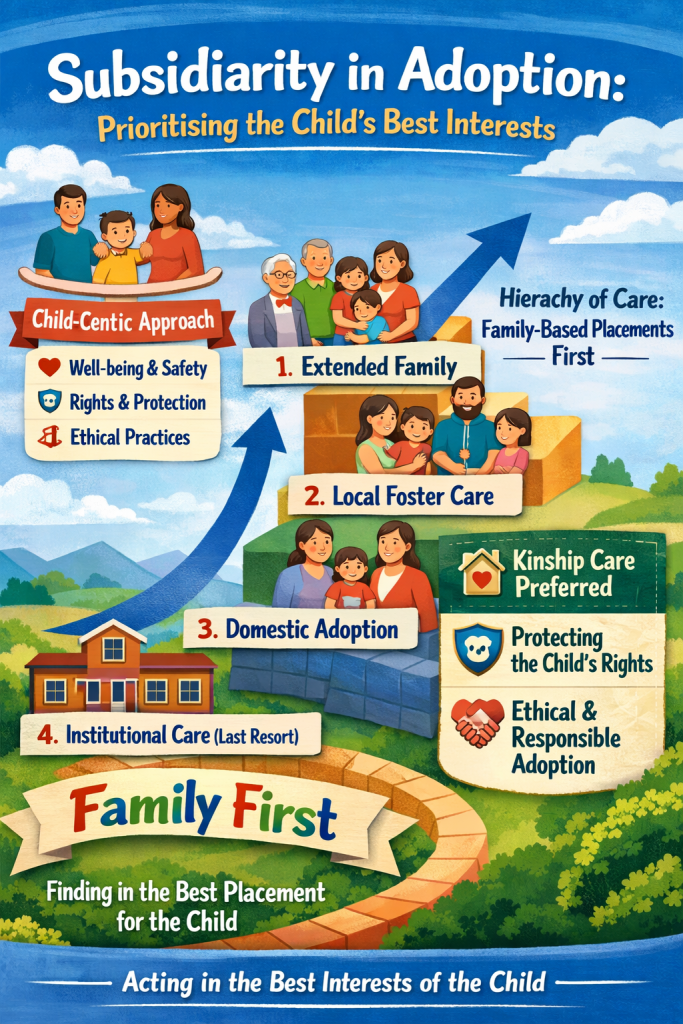
Subsidiarity in adoption refers to the principle of making decisions about a child’s care and
upbringing at the most local and immediate level possible. The adoption process includes
safeguards to protect the child’s rights and well-being. A child-centric approach means that all
decisions and actions should prioritise what is best for a child’s overall well-being, safety, and
development. This principle guides all aspects of adoption, from placement decisions to postadoption support. Collectively, these concepts strive to conduct adoption processes ethically,
responsibly, and with the primary focus on the welfare of the involved child.
The principle of subsidiarity emphasises that a child’s placement should follow a hierarchy of
care options, prioritising family-based care over institutionalisation. The policy of exploring
family or kin-based placements before considering unrelated adoptive families aligns well with
the principle of subsidiarity in the context of relative adoptions.

 Safe Childhood India
Leave a comment