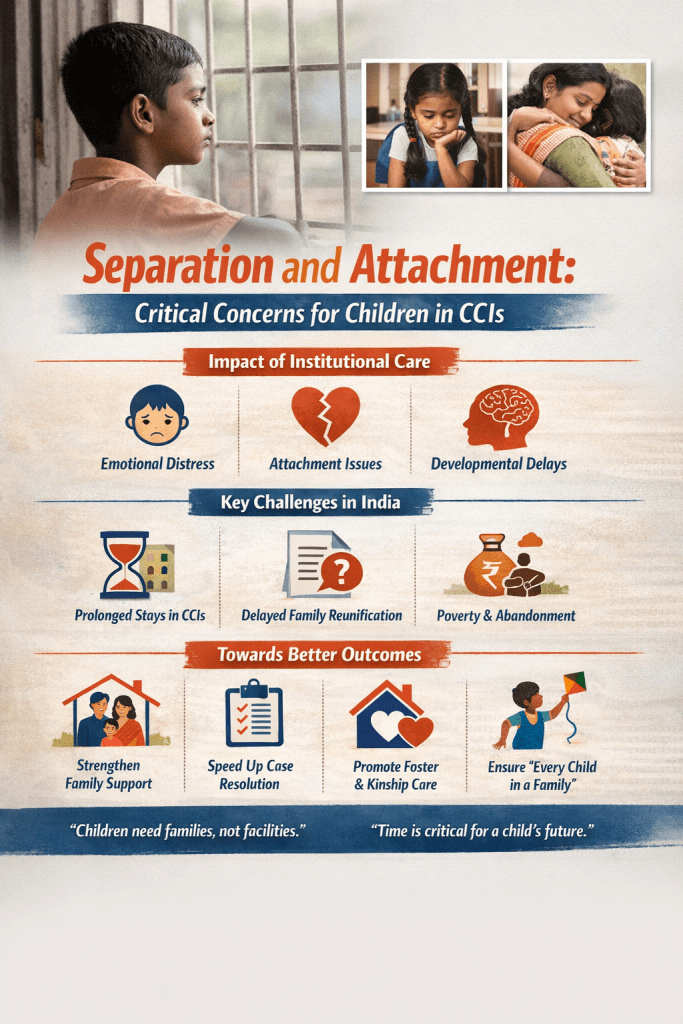
Separation from parents and prolonged residence in Child Care Institutions (CCIs) significantly affect a child’s emotional security, development, and future well-being. Research and practice consistently show that young children require stable, continuous caregiving relationships to develop trust, regulation, and healthy attachment. When institutional care becomes prolonged, frequent caregiver changes and limited individual attention can deepen emotional distress and delay recovery.
In India, institutional placement often follows family crisis, poverty, or abandonment, yet case resolution and permanency planning are frequently delayed. Each additional month in institutional care reduces the child’s chances of forming secure attachments and increases vulnerability to behavioural and psychosocial difficulties. While CCIs may meet immediate safety and care needs, they are not designed to provide the permanence and emotional continuity that children require.
National and international child rights frameworks, including the Juvenile Justice Act, 2015, call for preventing unnecessary separation and prioritising family-based care. Policy focus must therefore shift toward early family support, timely decision-making, individualised care planning, and accelerated transitions to family environments to safeguard children’s rights and long-term outcomes.
Message
Children should remain in Child Care Institutions only for the minimum period necessary, while continuous efforts must be made to improve the quality of institutional care through standards, monitoring, and child-centred practices.

 Safe Childhood India
Leave a comment