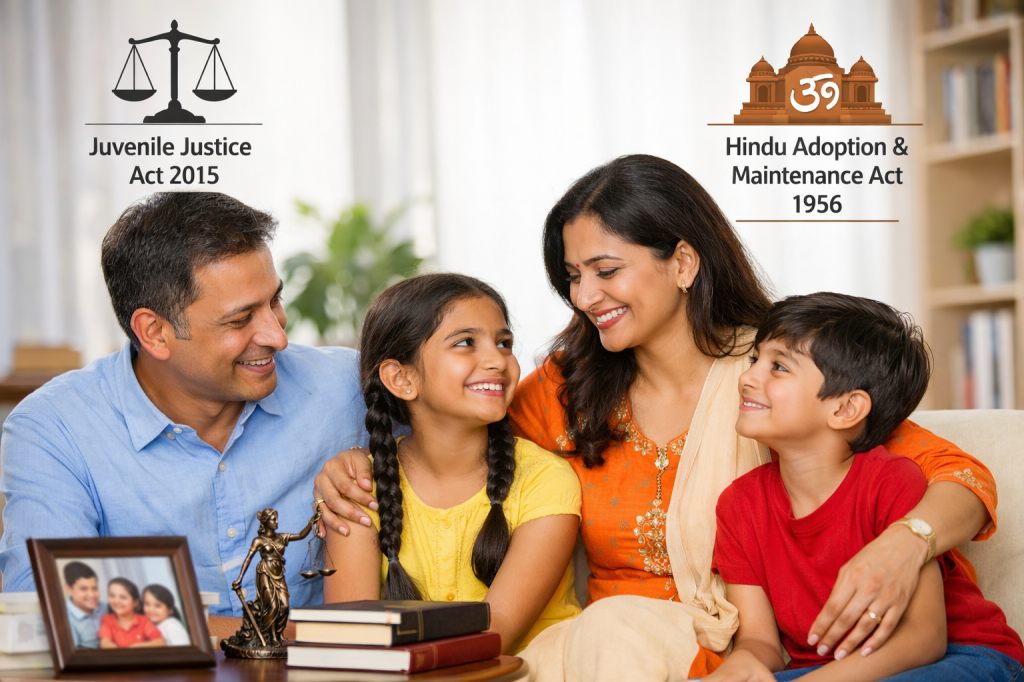
In India, stepchild adoption is considered a family adoption because it integrates the child into an existing family structure, preserves familial bonds, ensures legal and emotional security, and prioritises the child’s best interests. India recognises stepchild adoption through two distinct legal pathways: the Juvenile Justice (Care and Protection of Children) Act, 2015, a secular law, and the Hindu Adoption and Maintenance Act, 1956, a personal law for Hindus. Behind these statutes lie real families seeking stability, belonging, and legal certainty for children growing up in blended households.
Consider a child who has lived for years with a biological parent and a caring step-parent after divorce or widowhood. Emotionally, the child already belongs to this new family. Yet, without legal adoption, questions of guardianship, inheritance, and decision-making remain unresolved. Indian law offers solutions. The Juvenile Justice Act lays a procedure and provides a child-centric, secular framework applicable to all citizens, ensuring that adoption serves the best interests of the child above all else. Alongside this, the Hindu Adoption and Maintenance Act allows Hindu families to formalise stepchild adoption within their personal law framework which is automatic, recognising the adoptive relationship as equivalent to a biological one. Together, these laws reflect India’s attempt to balance family autonomy, parental rights, and the child’s welfare. For more information one may access information from the website of CARA, the nodal adoption body in the country.
Message
While procedures may differ, the objective remains the same: to give a child not just a home, but a legally secure identity within the family they already call their own.


 Safe Childhood India
Leave a comment