Thomas Gray’s “Elegy Written in a Country Churchyard”. The correct lines are:
“Full many a flower is born to blush unseen,
And waste its sweetness on the desert air.”
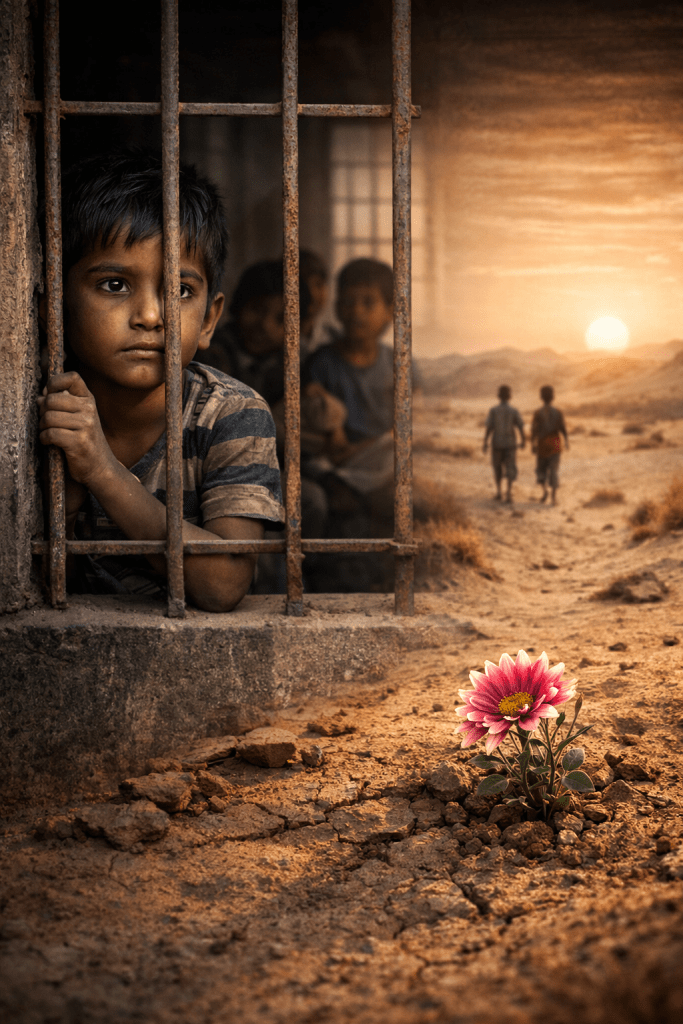
The lines “Full many a flower is born to blush unseen, and waste its sweetness on the desert air” metaphorically capture the lived realities of children in need of care and protection (CNCP) in India and many other countries. So many children are born with intelligence, creativity, kindness, and resilience—but their lives begin in conditions of neglect, abuse, abandonment, trafficking, conflict with the law, or extreme poverty. Without family care, early stimulation, education, or emotional security, their potential remains invisible. Like the unseen flower, they exist, but society does not truly see them
Structural vulnerabilities, when compounded by systemic delays and inadequate family-based alternatives, result in the underdevelopment of children’s cognitive, emotional, and social capacities.
The Juvenile Justice (Care and Protection of Children) Act, 2015 mandates that the best interest of the child shall be the primary consideration in all decisions concerning their care, rehabilitation, and reintegration. The Act, read with the Adoption Regulations, 2022, and the Model Foster Care Guidelines, 2024, prioritises family-based care—restoration, kinship care, foster care, and adoption—over institutionalisation. However, prolonged stays in child care institutions, delays in declaring children legally free for adoption, and limited implementation of foster care frameworks undermine this statutory intent.
In this context, the “desert air” symbolises institutional inertia, social indifference, and gaps in governance that prevent timely interventions. When systems fail to ensure early placement in nurturing family environments, children’s potential remains unseen and unrealised.
Message
Strengthening statutory compliance, promoting accountable decision-making by Child Welfare Committees, and expanding quality family-based care are essential to prevent the silent loss of human potential and to fulfil the constitutional and legal promise of child protection in India.


 Safe Childhood India
Leave a comment