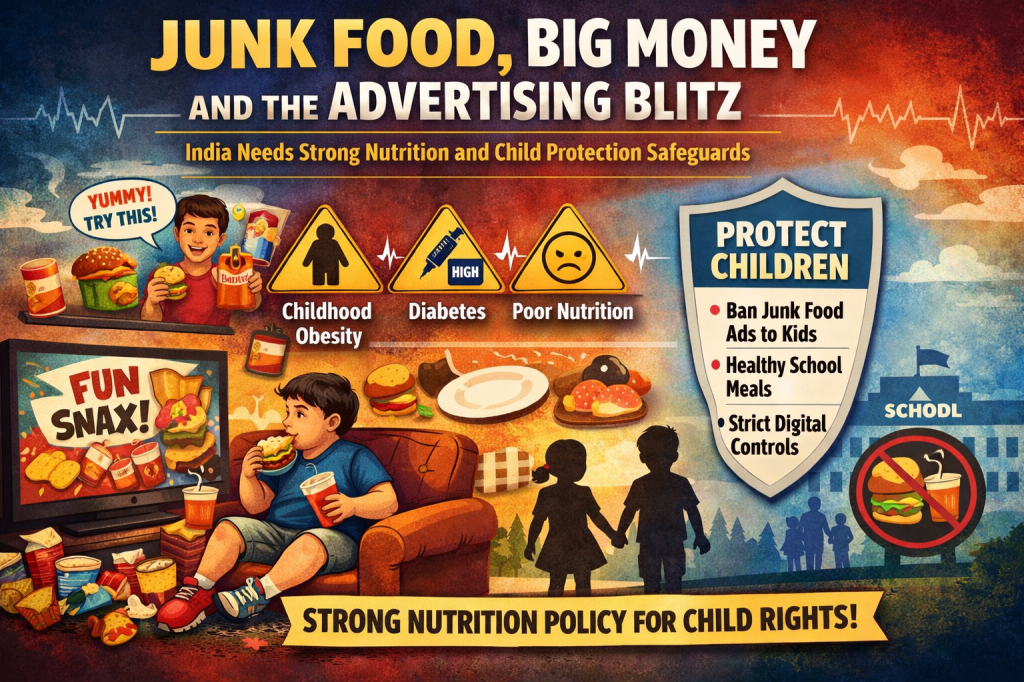
India faces an unchecked surge of junk food marketing driven by corporate profits and aggressive advertising targeted at children. Ultra-processed foods high in sugar, salt, and unhealthy fats are promoted through television, digital platforms, and influencers, shaping harmful eating habits early in life. This commercial exploitation contributes to childhood obesity, diabetes, malnutrition, and poor cognitive development. A strong national nutrition policy must be integrated into India’s child protection framework. As vulnerable rights-holders under the Juvenile Justice Act, 2015, children require safeguards from misleading food advertising, unhealthy school food environments, and digital marketing abuse. Protecting child nutrition is a child rights imperative, not a lifestyle choice.
A strong national nutrition policy must be integrated into India’s child protection framework, recognising nutrition as a core child rights and safeguarding issue rather than a matter of individual choice. Protecting children from harmful food environments and commercial exploitation is essential to their survival, development, and best interests.

 Safe Childhood India
Leave a comment