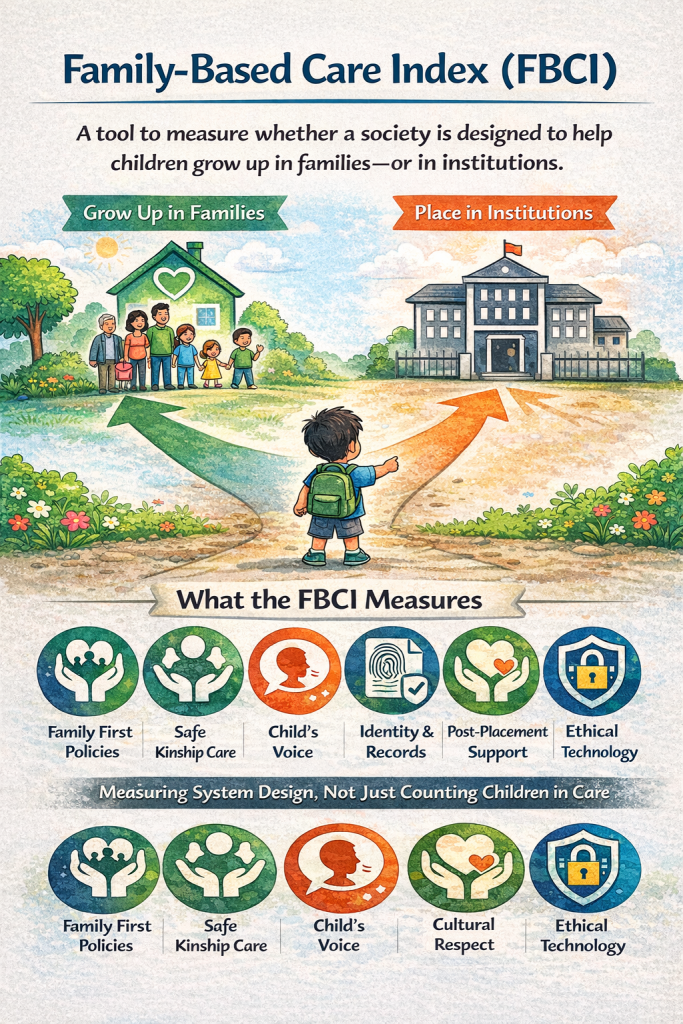
The Family-Based Care Index (FBCI) is a tool to understand whether a society is truly designed to help children without parents grow up in families, or whether it pushes them into institutions by default.
Most child protection systems say they support family-based care. In practice, however, institutions are often easier to manage, fund, and monitor. Because systems measure institutions—beds, buildings, and paperwork—they end up strengthening them. Families, on the other hand, are rarely measured or supported in the same way.
The FBCI changes this. Instead of counting placements or facilities, it looks at how the system itself works. It asks one clear question: Is it easier for a child to be cared for by family members, or to be placed in an institution?
The Index examines key areas such as whether laws prioritise families, how kinship and relative care are supported, whether children are heard as they grow, how identity and records are preserved, what support families receive after placement, whether cultural caregiving practices are respected, and how technology is used safely and ethically.
The FBCI does not rank countries or judge cultures. It helps decision-makers see where systems help families—and where they quietly fail them.


 Safe Childhood India
Leave a comment