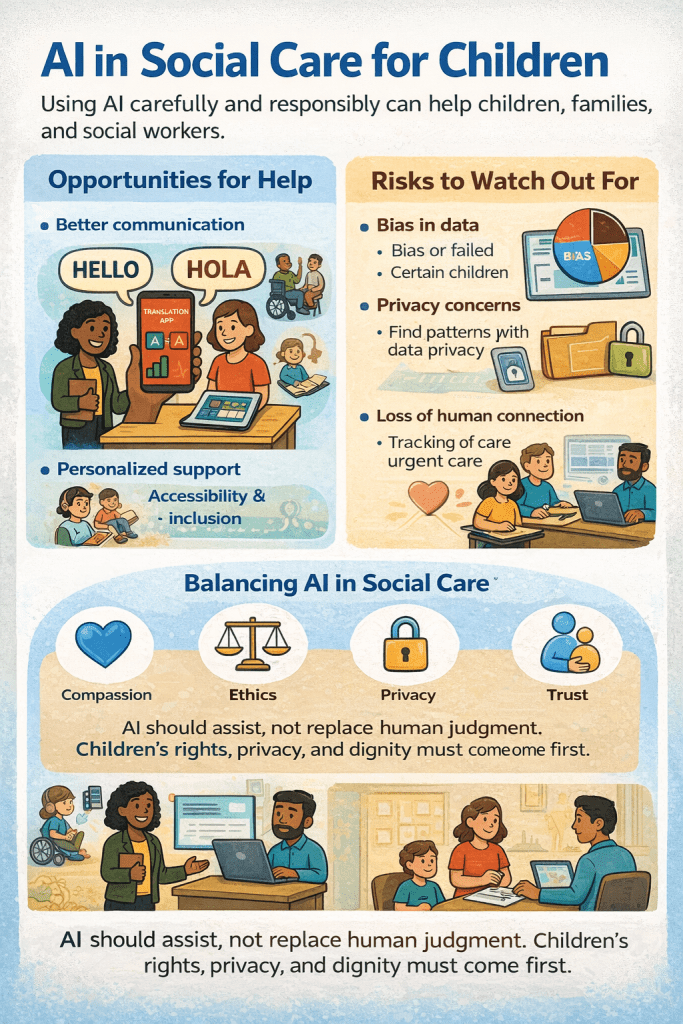
Artificial intelligence (AI) can play a helpful role in social care for children if it is used carefully and responsibly. AI tools can improve access and inclusion by helping families communicate better. For instance, translation apps can help families who don’t speak the local language, and speech-to-text tools can help kids who have trouble hearing or learning. AI can also support personalised care by adjusting learning or support plans to suit each child’s needs, including those with disabilities or neurodiverse conditions.
AI can help professionals, too. It can analyse reports, case records, and evaluations to identify patterns, highlight what works best, and support better planning and decision-making. This can save time and help services focus more on children who need urgent care.
At the same time, there are serious risks. AI systems can reflect bias present in past data and may unfairly affect certain children or families. Over-reliance on technology can weaken trust and reduce human connection, which is central to child care work. There are also concerns about data privacy, consent, and who is accountable for decisions influenced by AI.
Message
Therefore, AI should only support — not replace — human judgment. Compassion, ethics, transparency, and children’s rights must always guide its use.


 Safe Childhood India
Leave a comment