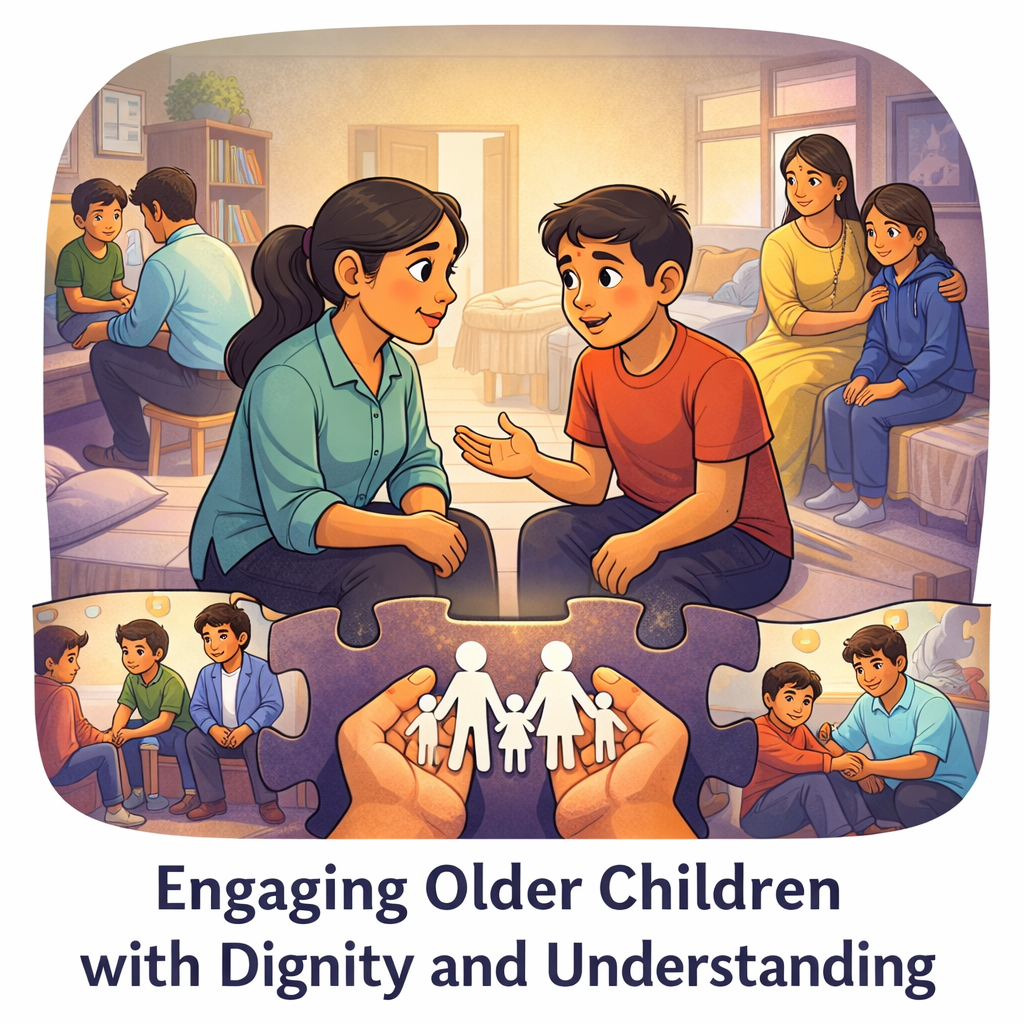
Participating with older children living in child care institutions requires an approach rooted in understanding rather than judgement. Many of these children have spent years navigating loss, separation, neglect, or repeated rejection. Their behaviours—such as resistance, silence, or anger—are often survival responses shaped by experience, not signs of defiance or unwillingness to change. Recognising this is the first step toward genuine engagement.
A non-judgemental approach involves listening attentively, acknowledging emotions, and respecting the child’s perspective. Older children, in particular, need to feel that their opinions matter and that they are partners in decisions about their education, care, and future planning. When adults avoid labels and assumptions, children are more likely to open up and participate constructively.
In institutional settings, where routines and rules can sometimes overshadow relationships, empathetic engagement helps restore dignity and self-worth. It builds trust between children and caregivers, making counselling, education, and life-skills preparation more effective. Over time, children begin to see themselves as capable individuals with choices and possibilities ahead. Engaging older children without judgment transforms care from mere supervision into meaningful support, enabling them to heal, develop confidence, and prepare for a stable and independent life beyond institutional care.


 Safe Childhood India
Leave a comment