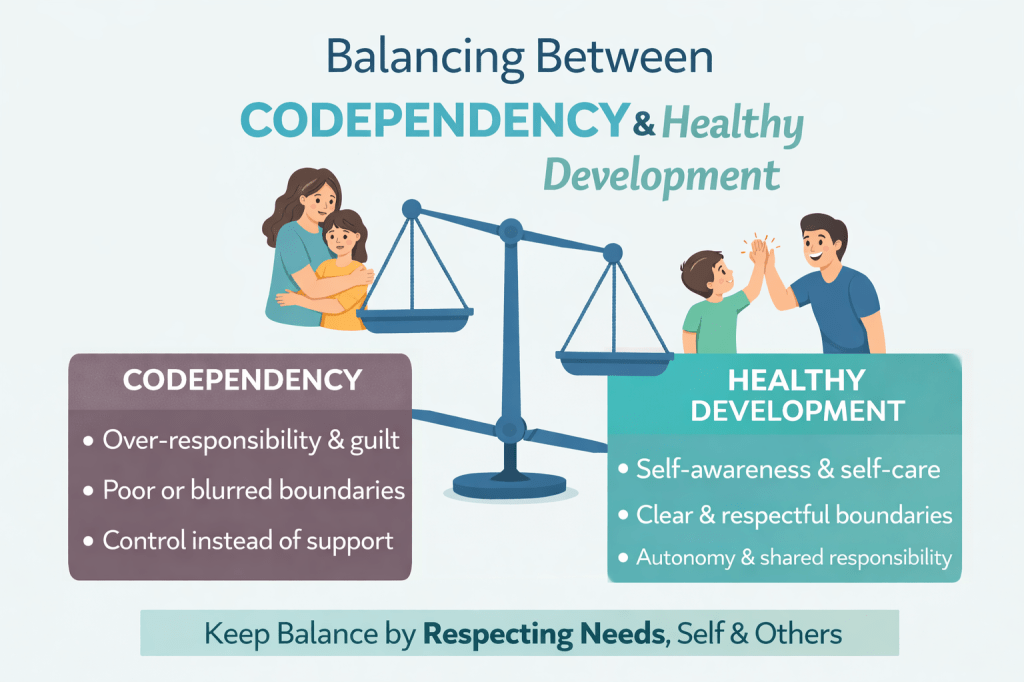
Codependency is generally considered negative, though it often grows out of positive intentions like care, loyalty, and responsibility. Balancing between codependency and healthy development requires learning how to care for others without losing oneself. The key difference lies in boundaries. Healthy development allows a person to support, guide, and nurture others while also recognising their own needs, limits, and responsibilities.
The first step is self-awareness. Understanding one’s emotions, triggers, and patterns of over-responsibility helps prevent slipping into excessive caregiving or control. Care should be offered as support, not as a duty driven by guilt or fear of rejection.
Clear boundaries are essential. Boundaries help define what belongs to us and what belongs to others. When individuals respect these limits, children and adults alike are encouraged to develop independence, problem-solving skills, and self-confidence.
Another important aspect is shared responsibility. Healthy relationships distribute emotional and practical responsibilities fairly, rather than placing them on one person. This is especially important in families and caregiving settings involving children.
Encouraging autonomy supports healthy development. Children should be guided, not rescued from every difficulty. Allowing age-appropriate choices and mistakes helps them build resilience and emotional strength.
Finally, self-care and reflection are not selfish. They sustain emotional balance and prevent burnout. When care is rooted in respect, balance, and mutual growth, it moves away from codependency and toward healthy, interdependent development.


 Safe Childhood India
Leave a comment