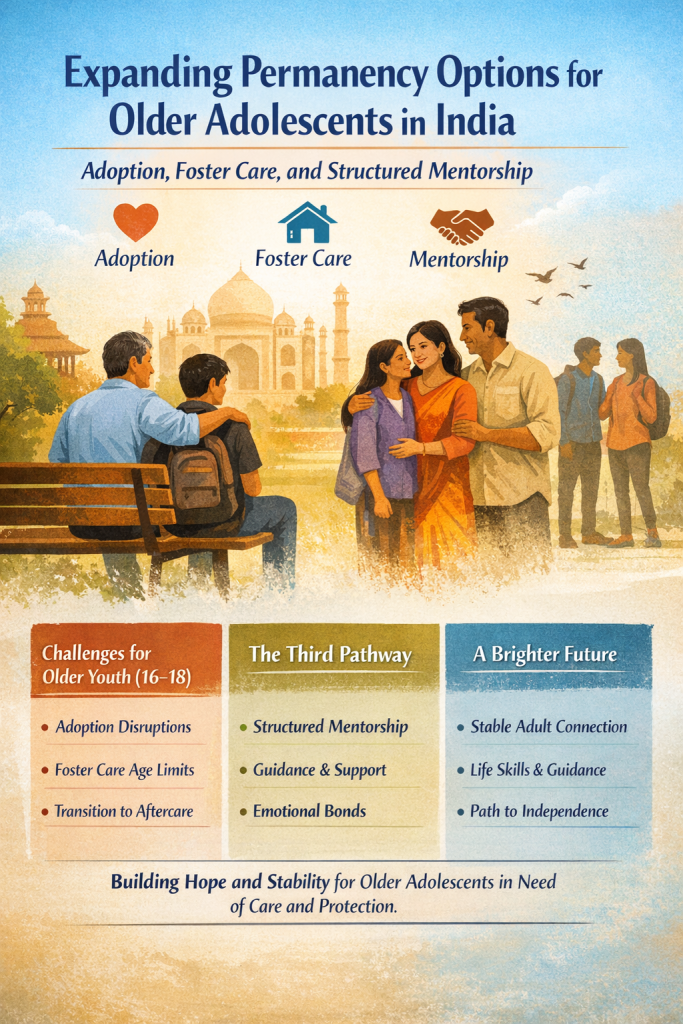
While the Juvenile Justice (Care and Protection of Children) Act, 2015, prioritises family-based rehabilitation, older adolescents face structural constraints.
Several countries have developed alternative permanency pathways for older adolescents who are unlikely to enter adoption. In India, adoption, foster care, and mentorship may need to be strategically strengthened to address the needs of Children in Need of Care and Protection (CNCP), particularly those aged 16–18 years.
Adoption referrals at this stage carry a higher risk of disruption due to adjustment challenges. In foster care, where a two-year stable placement may precede adoption consideration, the child may attain majority before eligibility is achieved. Additionally, prospective adoptive parents may exceed prescribed age criteria, limiting permanency outcomes.
To bridge this gap, a structured mentorship model may be introduced as a complementary rehabilitation mechanism. Screened and approved adult mentors could provide sustained emotional support, life guidance, and social capital without altering the child’s legal status.
A triadic permanency framework—adoption, fostering, and mentorship—would better serve older adolescents approaching adulthood by combining legal, relational, and hybrid models of stability.


 Safe Childhood India
Leave a comment