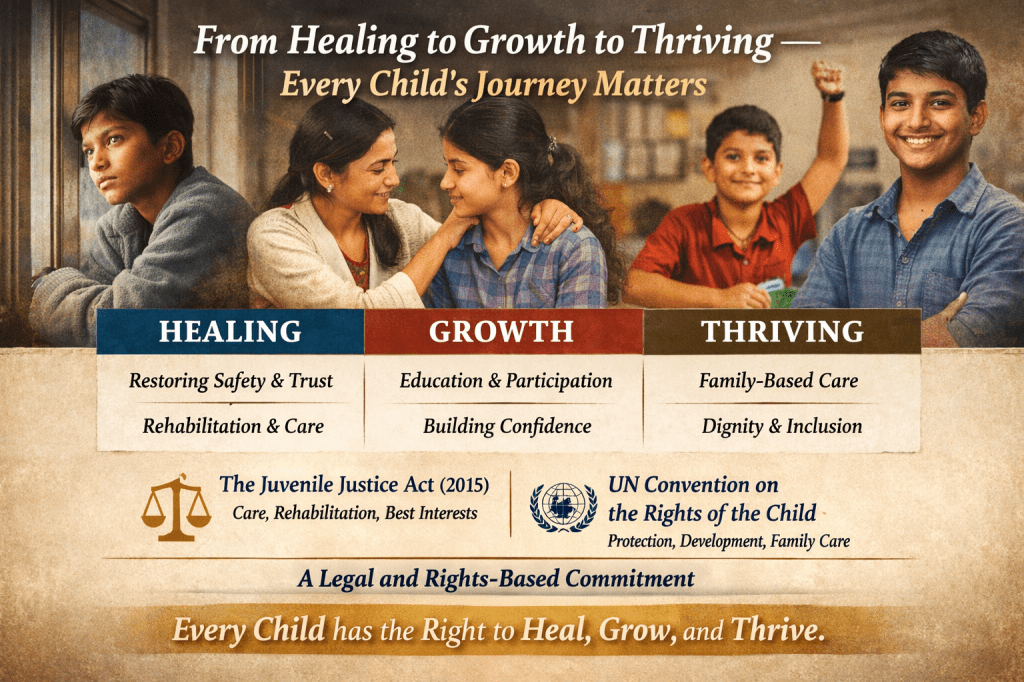
No two children arrive at the same place at the same time. Many carry invisible wounds—grief, fear, and silence shaped by neglect, loss, or trauma. Under the Juvenile Justice (Care and Protection of Children) Act, 2015, such children are recognised as being in need of care and protection, and the law mandates a response rooted in dignity, safety, and their best interests (Section 3).
Healing is the first obligation of the system. The JJ Act emphasises rehabilitation and social reintegration (Section 39), ensuring that children receive care, protection, and stability. This aligns with the United Nations Convention on the Rights of the Child, particularly Article 39, which calls for recovery and reintegration in an environment that fosters health, self-respect, and dignity.
From healing comes growth. The JJ framework promotes development through education, life skills, and participation, while the UNCRC (Articles 12 and 29) affirms a child’s right to be heard and to develop to their fullest potential.
Thriving is the ultimate goal—family-based care, dignity, and inclusion. Both the JJ Act (principle of deinstitutionalisation) and UNCRC (Article 20 and 21) prioritise family environments over institutional care.
Every child’s journey—from healing to growth to thriving—is not charity; it is a legal and moral obligation.


 Safe Childhood India
Leave a comment