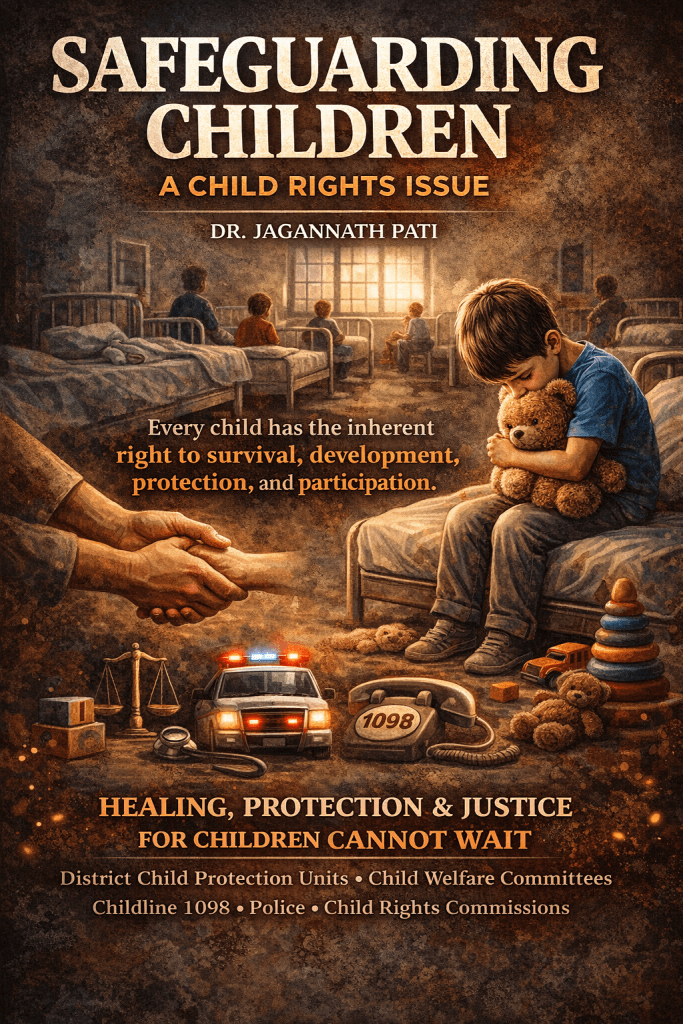
Safeguarding children is fundamentally a child rights issue anchored in the Constitution of India and the UN Convention on the Rights of the Child (UNCRC). Every child has the inherent right to survival, development, protection, and participation, and these rights must be ensured through responsive families, communities, and state systems. Childhood today is increasingly shaped by social vulnerabilities, migration, poverty, abuse, and neglect, making child protection an urgent national priority.
Children are uniquely vulnerable and depend on adults and institutions to protect their physical, emotional, and psychological well-being. When families or communities fail, the responsibility shifts to the child protection system to intervene promptly and ethically. India has established a robust legal and institutional framework through the Juvenile Justice Act, 2015, the POCSO Act, 2012, the RTE Act, 2009, and the Commission for Protection of Child Rights Act, 2005. These laws collectively affirm that children are rights-holders, not passive recipients of care.
Safeguarding children requires early identification of risk, prevention of abuse, timely reporting, and effective rehabilitation. Institutions such as District Child Protection Units, Child Welfare Committees, Childline 1098, police, and Child Rights Commissions must function in coordination and act without delay. A society’s commitment to child protection reflects its moral and democratic strength—because healing, protection, and justice for children cannot wait.


 Safe Childhood India
Leave a comment