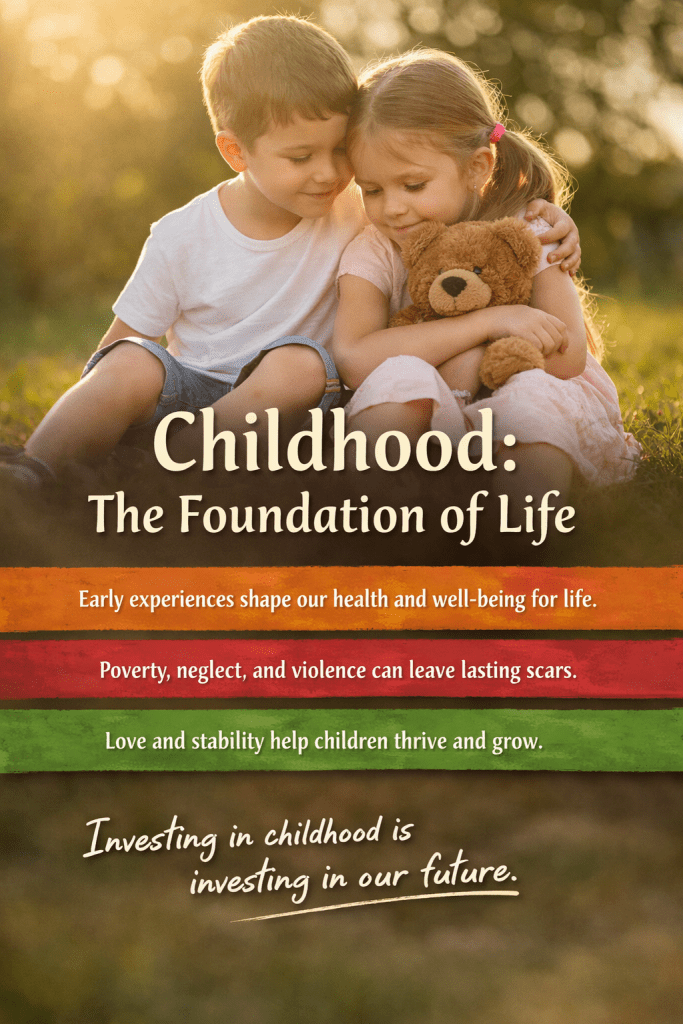
Childhood is a defining phase of life that shapes who we become as individuals and as members of society. Experiences in the early years leave lasting imprints on a child’s emotional health, cognitive abilities, and social behaviour. When children grow up in environments marked by poverty, neglect, violence, or instability, their development is often compromised in ways that can persist well into adulthood.
Young children depend heavily on caring and consistent relationships to feel safe and to develop resilience. In the absence of such support, prolonged stress can overwhelm a child’s coping capacity, affecting brain development, emotional regulation, and physical health. Conversely, nurturing environments—where children experience love, security, and responsive caregiving—enable curiosity, language development, confidence, and healthy risk-taking.
In today’s rapidly changing world, families face increasing pressures due to urbanisation, economic insecurity, changing family structures, and the demands of a globalised culture. These shifts have weakened traditional support systems that once helped families nurture children. As a result, many children grow up without the stability and guidance they need.
Message
Strengthening early childhood environments is therefore essential. Families, communities, and institutions must work together to promote essential life skills such as self-control, empathy, communication, critical thinking, and resilience. Investing in childhood is not only about protecting children—it is about building a more humane, just, and sustainable society for the future.

 Safe Childhood India
Leave a comment