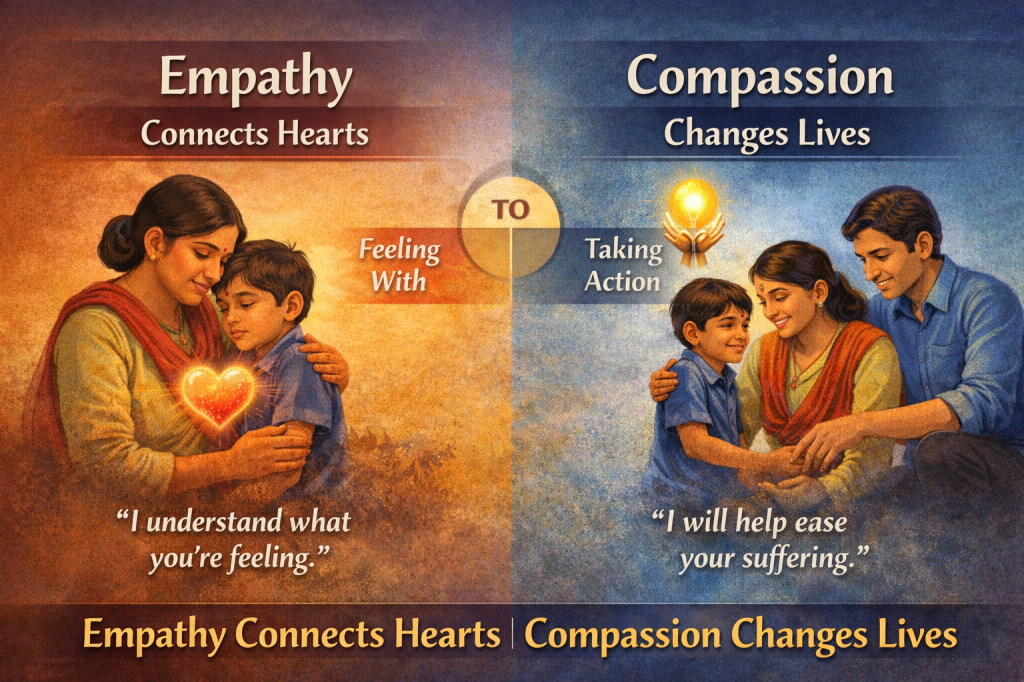
Empathy and compassion are closely related, yet they are not the same. Empathy is the ability to understand and feel what another person is experiencing. It helps us connect emotionally, recognise pain, and acknowledge another’s reality. When we empathise, we listen, relate, and say, “I understand how you feel.” This emotional connection is powerful, especially for children who have experienced loss, neglect, or trauma, as it assures them that their pain is seen and validated.
Compassion goes a step further. It begins with empathy but does not end there. Compassion involves a conscious decision to act in order to reduce suffering. It asks not only “What are you feeling?” but also “What can I do to help?” While empathy creates awareness, compassion creates responsibility. It transforms concern into care and feeling into purposeful action.
In the context of vulnerable children—particularly those in Child Care Institutions—empathy without action can unintentionally remain passive. Compassion, however, leads to consistent caregiving, timely decisions, protection from harm, and efforts to restore family life or create stable alternatives. It motivates systems, caregivers, and communities to intervene, heal, and support.
Message
Empathy connects hearts by building understanding and trust. Compassion changes lives by turning that understanding into meaningful, sustained action. Together, they form the ethical foundation of humane child protection, but it is compassion that ultimately creates safety, dignity, and hope for a better future.

 Safe Childhood India
Leave a comment