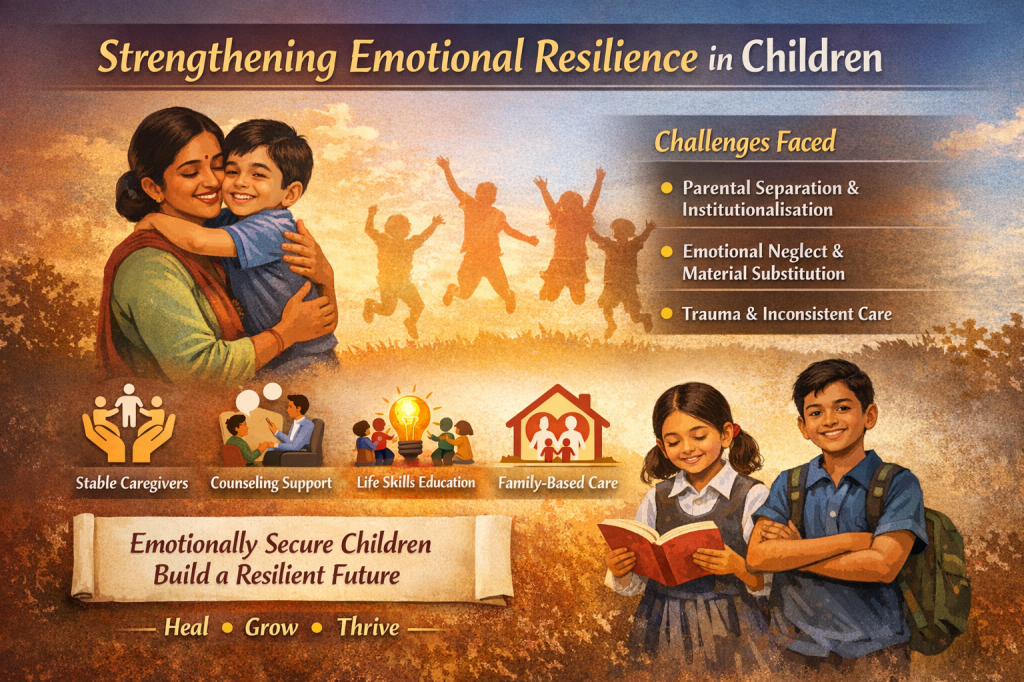
Emotional resilience is the foundation of a child’s ability to navigate stress, relationships, and change with confidence and stability. From early childhood, emotional experiences shape how children understand themselves, relate to others, and respond to adversity. In India, where family ties, cultural identity, and community relationships have traditionally provided emotional security, nurturing emotional well-being is as essential as ensuring physical health and education.
However, social and economic transitions have altered childhood experiences. Urbanisation, migration, demanding work schedules, and the gradual erosion of extended family support have reduced opportunities for consistent emotional engagement with children. Many children experience emotional neglect not due to lack of material resources, but because of limited time, attention, and meaningful interaction. In some households, affection is unintentionally replaced by material compensation, weakening emotional bonds and communication.
These challenges are significantly intensified for children living in Child Care Institutions (CCIs). Many such children have faced separation, abandonment, abuse, or instability before entering care. Without consistent caregiving and emotional support, unresolved trauma can affect their behaviour, learning, and social relationships. Strengthening emotional resilience in institutional settings therefore requires deliberate and structured interventions.
Indian child protection frameworks, including the Juvenile Justice (Care and Protection of Children) Act, 2015, emphasise that institutional care must be temporary and child-centred. Emotional resilience can be fostered through stable caregiver relationships, counselling services, life-skills education, and opportunities for participation and expression. Special attention is required for adolescents preparing for independent living.
Message
Emotionally resilient children are better equipped to heal, adapt, and thrive. Investing in caregiver training, parenting support, and family-based alternatives to institutional care is essential for nurturing emotionally healthy children and building a compassionate, resilient society in India.

 Safe Childhood India
Leave a comment